Column · @theseotrendanalysispath
How SEO Trend Analysis Shapes Smarter Optimization Strategies
I have been doing SEO long enough to remember when ranking a site was mostly about stuffing keywords into meta tags and building as many backlinks as possible. Those days are gone. Google has fundamentally changed what it values, and the pace of those changes keeps accelerating. The only way to stay effective is to treat your work as a continuous process of observation and adjustment, grounded in what the data actually says. That is where seo trend analysis becomes essential. It is not a buzzword or a dashboard you glance at once a month. It is the practice of watching how ranking factors shift over time, understanding why they shift, and using that understanding to decide what to do next.
Rank tracking used to be simple. You checked where your page sat for a term, and if it dropped, you built more links or tweaked the title tag. Now rank tracking means looking at SERP volatility, noticing when Google introduces a new element like a featured snippet or a video carousel, and asking yourself what that means for your click-through rate. A position one ranking today might deliver fewer visitors than a position three ranking did last year, because Google is answering more questions directly on the search results page. Zero-click searches are real, and they are growing. If you only look at rankings without analyzing traffic and engagement, you miss half the story.
Why SEO Trend Analysis Matters More Than Ever
Search engines, especially Google, update their algorithms hundreds of times a year. Most updates are small, but some, like the helpful content system or the broad core updates, can reshape entire niches overnight. The problem is that you cannot predict these changes by intuition alone. You need a systematic way to detect signals early. That is what seo trend analysis provides. It helps you separate short-term noise from lasting shifts in how Google evaluates content, authority, and user satisfaction.
For example, when Google rolled out passage indexing, many sites saw their organic traffic change in unexpected ways. Pages that ranked for a broad topic suddenly started ranking for specific subtopics buried in the content. Without trend analysis, you might have assumed your page was losing authority. With it, you could see that Google was now pulling individual passages into featured snippets, which actually increased your visibility for long-tail queries. The difference between panic and opportunity was having the right data and knowing how to read it.
The Components of a Useful Trend Analysis
A solid trend analysis should cover several dimensions. It is not enough to look at one metric in isolation. You need to connect the dots between what Google is doing, what your competitors are doing, and how your own site is performing.
- Rank tracking and SERP volatility. Monitor your positions for core terms, but also watch for changes in the SERP layout. Are featured snippets appearing more often? Are "People also ask" boxes expanding? These shifts affect click-through rates and should inform your content strategy.
- Keyword difficulty and search intent. A keyword that was easy to rank for six months ago might now be crowded with high-authority domains. Check keyword difficulty scores in tools like Ahrefs, Semrush, or Moz, but also review the actual search results to confirm intent. If the SERP is dominated by product pages and your content is informational, you are fighting an uphill battle.
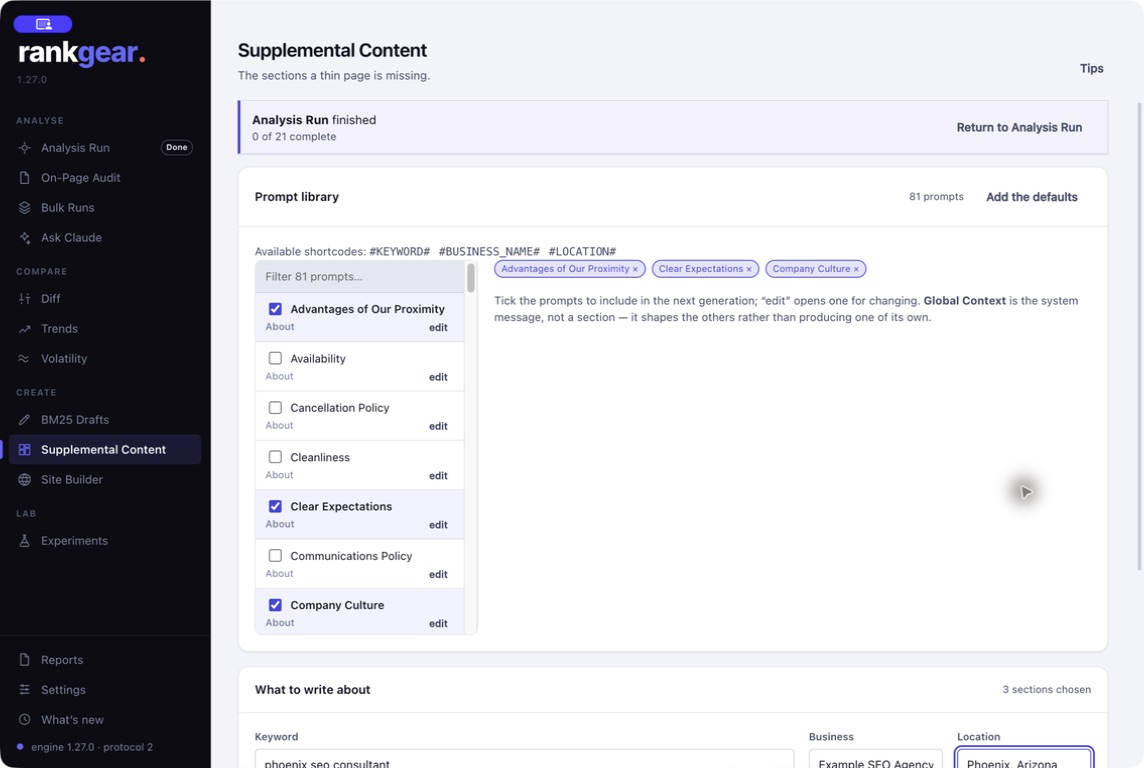
- Content gap analysis. Compare your site's coverage against competitors for a topic cluster. Identify subtopics they cover that you do not. Tools like RankGear can help surface these gaps by analyzing ranking factors for specific queries and recommending where to focus your effort.
- Core web vitals and technical signals. Page experience metrics, including loading speed, interactivity, and visual stability, are now part of the ranking equation. Trend analysis should track your Core Web Vitals scores over time, especially after site changes or CMS upgrades.
Each of these components feeds into the others. A drop in rankings might trace back to a technical issue, a shift in search intent, or a new competitor with stronger backlinks. The analysis helps you diagnose the root cause instead of guessing.
From Data to Action: Making Trend Analysis Practical
Collecting data is the easy part. The hard part is turning it into decisions. I have seen teams spend hours building dashboards that show them exactly what they already know, without revealing anything actionable. A good seo trend analysis should answer three questions: What changed? Why did it change? What should we do about it?
Let me give you a concrete example. Suppose you manage a site that reviews software products. Over three months, you notice that your organic traffic to comparison pages is declining, even though your rankings for those terms are stable. A basic rank tracker would tell you nothing is wrong. But a trend analysis that includes SERP volatility reveals that Google now shows a "Product comparison" carousel at the top of those queries. Your page ranks third, but the carousel steals the clicks. The action is not to build more backlinks. It is to optimize your content for inclusion in that carousel, perhaps by structuring your comparison table with schema markup or by adding a clear "winner" summary at the top of the page.
Another scenario involves content that was performing well and then dropped after a core update. You check Google Search Console and see impressions stayed flat but clicks dropped. That suggests a change in how Google displays your listing. Maybe your meta description stopped appearing because Google chose to pull a snippet from a competitor. Or maybe the helpful content system devalued your page because it was too thin on first-hand expertise. The trend analysis points you toward a content refresh, not a technical fix.
Tools That Support Trend Analysis
You do not need a dozen tools to do this well, but you do need the right ones. Google Search Console gives you free access to your own site's click and impression data. It is the foundation for understanding how Google sees your pages. For competitive data, tools like Ahrefs, Semrush, and Moz each have strengths. Ahrefs is strong for backlink analysis and keyword difficulty. Semrush offers good content gap features and domain comparisons. Moz has a long history in link analysis and a solid keyword explorer.
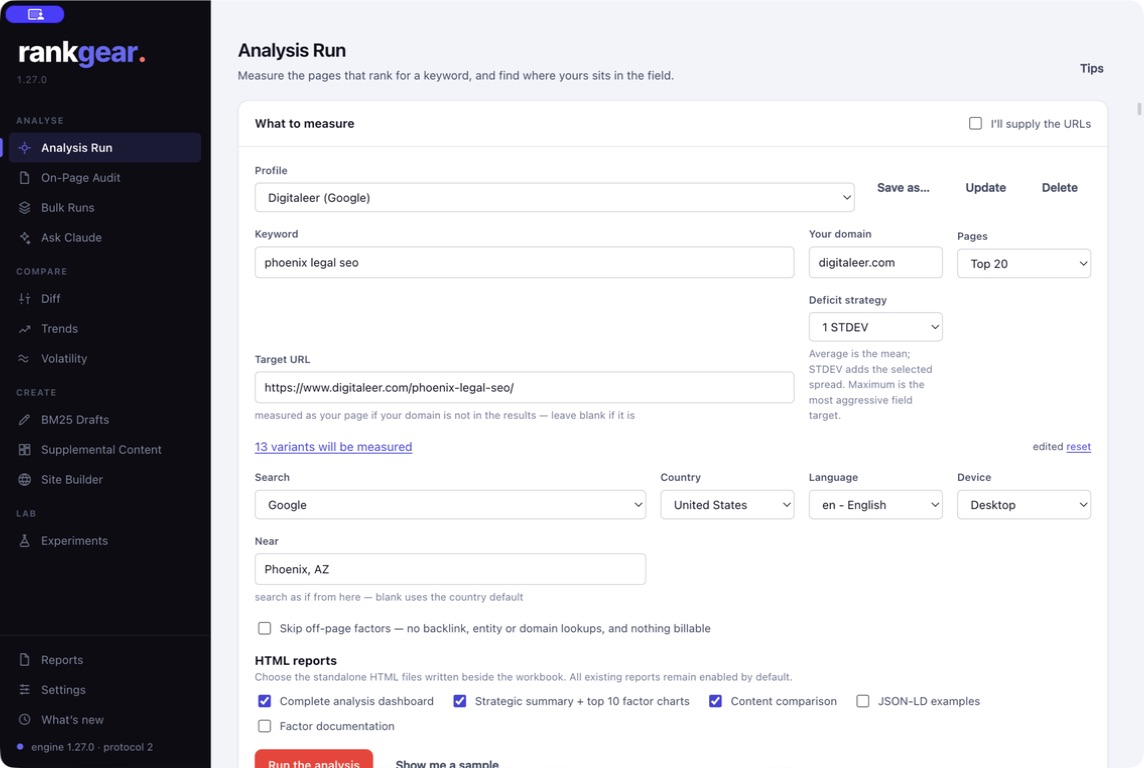
For a more focused approach, platforms like RankGear analyze ranking factors for specific queries and give you an evidence-based optimization plan. That saves time because you do not have to cross-reference multiple data sources manually. Instead, you get a clear recommendation on what to change and why. That kind of specificity is valuable when you are managing multiple sites or large content portfolios.
I also recommend setting up a simple tracking spreadsheet or a lightweight dashboard that captures the metrics you actually act on. It is easy to get lost in vanity metrics like total backlinks or domain authority. Focus on changes that correlate with traffic and conversions.

Understanding Google's Algorithmic Shifts
Google's ranking system is no longer a single algorithm. It is a collection of models and signals, including RankBrain, BERT, and the helpful content system. RankBrain helps Google interpret queries it has never seen before by relating them to concepts. BERT improved understanding of natural language, especially prepositions and context. The helpful content system aims to reward content that demonstrates genuine expertise and user satisfaction, rather than content written solely for search engines.
These systems interact in complex ways. A page might pass the BERT test for natural language but fail the helpful content test if it lacks original research or firsthand experience. Trend analysis helps you see these interactions by correlating ranking changes with specific update announcements. When Google confirms a helpful content update, you can check your affected pages against the system's guidance. Does the page reflect direct knowledge? Does it answer the user's question thoroughly? If not, that is your priority.
PageRank is still a foundational signal, but its role has evolved. Early Google used PageRank almost exclusively. Now it is one of many signals, and Google has gotten better at evaluating the quality of a link profile. A few high-quality, relevant backlinks matter more than hundreds of low-quality ones. Trend analysis that tracks backlink growth and loss can reveal patterns. If you lose a link from a trusted .edu domain, that might explain a ranking drop. If a competitor gains links from multiple news sites, that signals a PR push you need to match or counter.
Common Pitfalls in Trend Analysis
One mistake I see often is overreacting to small fluctuations. Rankings bounce around naturally. Google personalizes results based on location, device, search history, and even time of day. Before you change your strategy, make sure the trend is sustained over weeks, not days. A good rule of thumb is to wait until you see a consistent change for at least two weeks before taking action.
Another pitfall is focusing only on your own site. Competitor analysis is part of trend analysis. If every site in your space saw a drop after an update, the issue is probably industry-wide, not unique to you. In that case, your response might be to stay the course or to look for opportunities to differentiate. If only your site dropped while competitors rose, you have a specific problem to solve.
Finally, do not ignore search intent. A trend analysis that shows declining traffic might actually mean the query intent changed. Maybe people now want a video tutorial instead of a written guide. Or they want a product comparison instead of a definition. If you do not match the intent, no amount of link building or technical SEO will save your rankings.
Building a Habit of Trend Analysis
The best approach is to make trend analysis a regular part of your workflow, not a response to a crisis. Set aside time each week to review your top pages, your key competitors, and any SERP changes. Use rank tracking data to spot anomalies early. Check Google Search Console for query-level trends. Run a content gap analysis quarterly to find new opportunities.
Over time, you will build a sense of what normal looks like for your niche. That instinct, combined with data, makes you faster and more confident in your decisions. You stop chasing every shiny new tactic and start focusing on the changes that actually move the needle.
SEO trend analysis is not about predicting the future. It is about understanding the present well enough to make smarter choices today. And in a field where the rules keep changing, that is the closest thing to a competitive advantage you can build.